Communicating Amid Abuse: What Survivors Should Know About Tactics, Boundaries & Safety — And How Loved Ones Can Respond
At Control Alt Delete, we know many Survivors reach out for help long before they are able to leave an abusive partner. Leaving is a process—not a moment—and during that time, Survivors often ask:
“How do I communicate with my abuser without allowing them to get away with their tactics?”
First, this reality must be acknowledged:
A Survivor cannot control or change an abuser’s behavior.
They can focus on grounding themselves, recognizing manipulation, and staying safe while preparing for their escape.
This article is to help Survivors understand abusive communication tactics, recognize manipulation when it’s happening, and—only when it is safe—use simple statements that reinforce their boundaries. These are not confrontations but grounding tools.
We have also included a section for family members and friends who witness abusive behavior, because their response can make a tremendous difference.
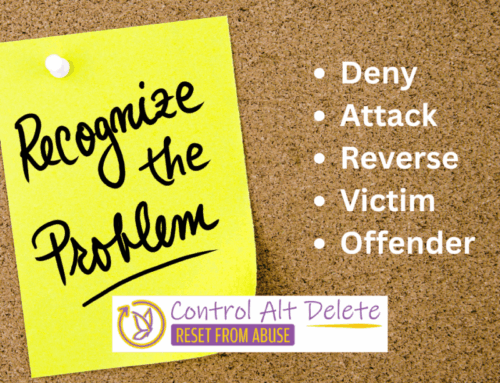
Understanding Abusive Communication Tactics
Abusers commonly use:
-
Gaslighting (“You’re imagining things.”)
-
Blame-shifting (“You made me angry.”)
-
Attention-stealing (making every event revolve around them)
-
Isolation (discouraging contact with loved ones)
-
Minimizing (“It wasn’t that serious.”)
Recognizing these tactics does not stop them—but it helps Survivors stay emotionally grounded.
Safety First: A Critical Reminder
Directly confronting an abuser can increase danger.
Any phrase below should be used only if the Survivor feels it is safe in their relationship dynamic. Always keep in mind that every single case of domestic abuse has the potential to become lethal, no matter what the type of abuse is or how long it has been going on.
Survivors should never feel obligated to challenge or correct an abuser.
If unsure, reach out to a domestic violence advocate or hotline for support and safety planning.
Grounding Statements Survivors Can Use (When Safe)
These statements are:
-
Neutral
-
Brief
-
Non-emotional
-
Focused on grounding the Survivor in reality
1. When the abuser makes everything about them
-
“This event is not about you.”
-
“We are keeping the focus where it belongs today.”
2. When the abuser complains or sulks at an event they agreed to attend
-
“You made a choice to come.”
-
“This was your decision.”
3. When the abuser minimizes harm
-
“What happened still matters to me.”
-
“I am allowed to feel how I feel.”
4. When the abuser shifts blame
-
“Your reactions are your own.”
-
“I’m responsible for my choices; you’re responsible for yours.”
5. When things escalate
-
“I’m not going to continue this right now.”
-
“We can talk later when things are calmer.”
These statements will not change the abuser—but they can help the Survivor stay anchored and clear-headed until they are able to escape safely.
When Family and Friends Witness the Abuse: What They Can Do
Bystanders often feel helpless or unsure about how to respond.
But your reaction matters more than you realize.
Loved ones can help by reinforcing truth, validating the Survivor, and refusing to normalize what they just witnessed—all without escalating the situation.
Here are trauma-informed responses that keep the Survivor’s safety central:
1. Support the Survivor Without Confronting the Abuser
Direct confrontation may escalate danger once you leave.
Instead, after the moment has passed, gently affirm what you saw:
-
“I want you to know I saw what happened, and it wasn’t okay.”
-
“You didn’t imagine that. I witnessed it too.”
-
“You don’t deserve to be spoken to that way.”
This breaks the isolation the abuser is trying to build.
2. Do Not Excuse, Minimize, or Joke About the Abuser’s Behavior
Avoid phrases like:
-
“Everyone fights.”
-
“That’s just how he gets.”
-
“She was just stressed.”
Instead, keep it simple:
-
“That behavior is not normal and not acceptable.”
This helps counter the abuser’s gaslighting.
3. After the Incident, Focus on the Survivor’s Feelings
Ask gentle, non-judgmental questions:
-
“How are you feeling after what just happened?”
-
“What do you need right now?”
-
“Would it help to talk about a safety plan?”
Your goal is support—not pressure or control.
4. Reaffirm Their Autonomy
A Survivor is often already being controlled.
Do not add more pressure.
Say things like:
-
“I trust your judgment about what is safest.”
-
“I’m here to support you, not push you.”
This builds trust and keeps the door open for future help.
5. Offer Specific, Practical Support
General offers (“Let me know if you need anything”) are harder for Survivors to act on.
Instead try:
-
“If you need a ride, call me—any hour.”
-
“If you ever need a place to stay for a night, my door is open.”
-
“If you want help creating a safety plan, I will sit with you while we do it.”
Practical support can save a life.
6. Remind the Survivor They Are Not Alone
Abusers want the Survivor isolated.
Your voice disrupts that narrative.
Say:
-
“You are not overreacting.”
-
“This wasn’t your fault.”
-
“I’m here, and I believe you.”
These are lifelines.
You Deserve Support—Right Now, Exactly Where You Are
Whether a Survivor is still living with their abuser, preparing to leave, or already rebuilding, they deserve safety, dignity, and support.
Control Alt Delete is here for Survivors.
When the moment comes to escape, we act fast—because lives depend on it.