Why Survivors Rationalize Abuse: Understanding the Psychology Behind Staying
One of the most misunderstood aspects of domestic violence is this question:
“Why do they stay?”
But a better—and more accurate—question is:
“What is happening inside a Survivor that makes the abuse make sense?”
Because to the Survivor, it does make sense. At least for a while.
Understanding why Survivors rationalize abusive behavior is critical—not just for awareness, but for how we respond, support, and ultimately save lives.
The Brain Is Trying to Survive, Not Analyze
When someone is living in ongoing abuse, their brain shifts into survival mode. This isn’t about logic—it’s about safety.
Psychologically, many Survivors develop what is known as trauma bonding—a powerful emotional attachment formed between the Survivor and the abuser through cycles of harm and kindness.
This bond doesn’t form because the abuse is acceptable.
It forms because the brain is trying to cope with something unbearable.
The Cycle That Rewrites Reality
Abuse is rarely constant. It follows a pattern:
- Harm
- Apology or remorse
- Affection or “love”
- Calm
- Then harm again
This cycle creates confusion. After moments of cruelty, the abuser may become kind, attentive, even loving. That contrast is powerful.
Over time, Survivors begin to hold onto the “good” moments as proof of who the abuser really is, and see the abuse as temporary or situational.
This is not denial—it’s conditioning.
Research shows that these alternating cycles of abuse and reward reinforce emotional attachment and make it harder to leave.
Rationalization as a Survival Strategy
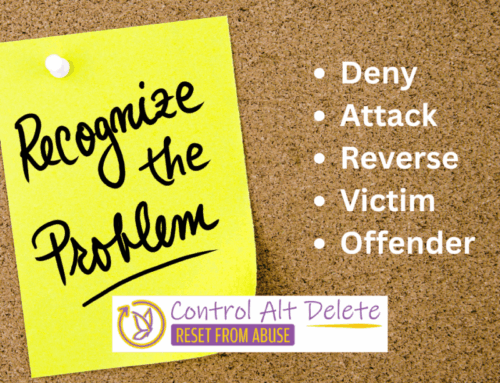
To outsiders, rationalizing abuse can look like:
- “They’re just stressed.”
- “It’s not always like this.”
- “They didn’t mean it.”
- “I made them angry.”
But internally, something deeper is happening.
Survivors are trying to resolve a painful contradiction:
“The person I depend on is also the person hurting me.”
To survive that contradiction, the brain often chooses the least dangerous explanation:
➡️ “It must be my fault.”
➡️ “They’re not really that bad.”
This process—called cognitive dissonance—pushes Survivors to justify the abuse as a way to reduce emotional distress.
Dependence Changes the Equation
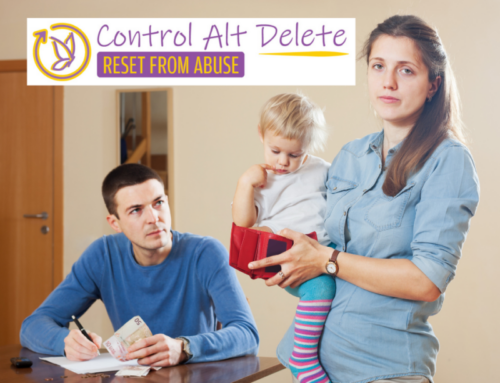
Many Survivors rely on their abuser for:
- Housing
- Financial stability
- Immigration status
- Children
- Emotional connection
When the person causing harm is also the source of survival, the brain adapts.
In some cases, Survivors even turn to the abuser for comfort after the abuse—because that’s where relief has been conditioned to exist.
This isn’t weakness.
It’s how human attachment works under pressure.
Isolation Silences Reality
Abusers often isolate Survivors from friends, family, and outside perspectives.
Without external reality checks, the abuser’s narrative becomes the only one.
Over time:
- Red flags become normalized
- Abuse becomes minimized
- Silence becomes protection
And rationalization becomes necessary just to get through the day.
Hope Is a Powerful Anchor
Many Survivors stay not because they don’t see the abuse—but because they remember who the abuser was at their best.
The apologies.
The promises.
The moments of love.
Hope becomes the tether:
“If I just hold on, it will go back to how it was.”
That hope is often intentionally reinforced by the abuser.
The Role of Self-Worth
Long-term abuse erodes self-esteem.
Survivors may begin to believe:
- They deserve the treatment
- No one else will love them
- This is what relationships look like
As self-worth decreases, tolerance for abuse increases.
And the rationalizations deepen.
Why This Matters
When we ask, “Why didn’t they leave?” we miss the reality:
Leaving isn’t just a physical act.
It’s a psychological unraveling of everything the Survivor has been conditioned to believe.
Rationalization is not ignorance.
It is a survival response to prolonged trauma.
What Survivors Actually Need
- Validation, not judgment
- Safety, not pressure
- Consistency, not confusion
- Support, not skepticism
And most importantly—
They need someone who understands that what looks irrational from the outside…
was once the only way to survive on the inside.
The Work We Do
At Control Alt Delete, we meet Survivors through their advocates in that exact moment—
when the reality starts to break through the rationalization.
When fear outweighs hope.
When survival demands action.
And when they are finally ready, even if just for a moment…
We are there to help them escape—safely, quickly, and without judgment.
Because understanding the why behind rationalization
is how we create the conditions for someone to finally choose freedom.

At Control Alt Delete, we don’t just remove the barriers keeping Survivors trapped.
We ask the questions that help save lives.