When Fear Becomes a Leash: How Abusers Create Irrational Fears to Control Survivors
We have talked about this before and it is worth repeating:
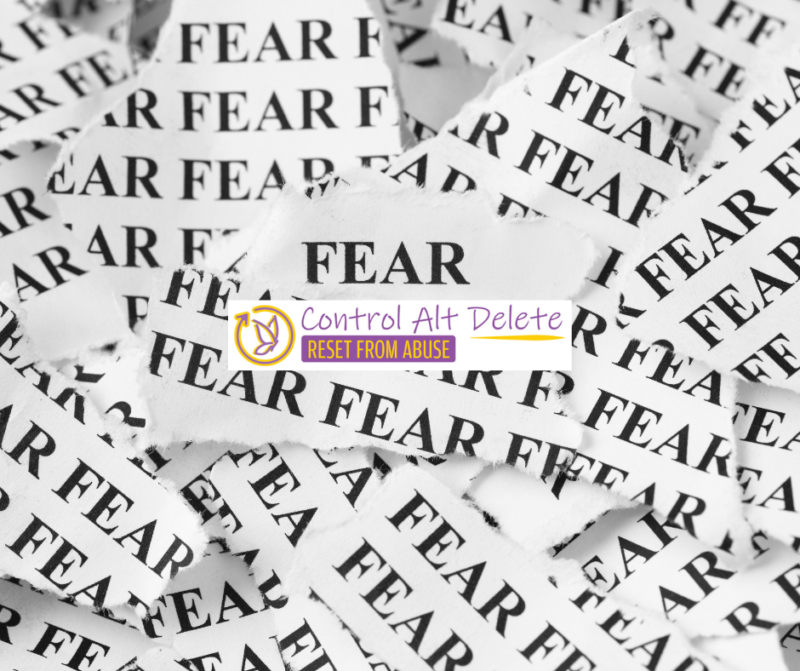
Fear can keep us alive. It teaches us to avoid genuine danger and helps us make wise decisions. But in abusive relationships, fear is often weaponized. Instead of protecting us, it becomes a tool of control.
One of the most overlooked forms of coercive control is when an abuser creates or amplifies irrational fears, then repeatedly uses those fears to limit a Survivor’s freedom, choices, relationships, and experiences. These fears often begin in childhood, but they can continue well into adulthood if the abusive relationship remains emotionally influential.
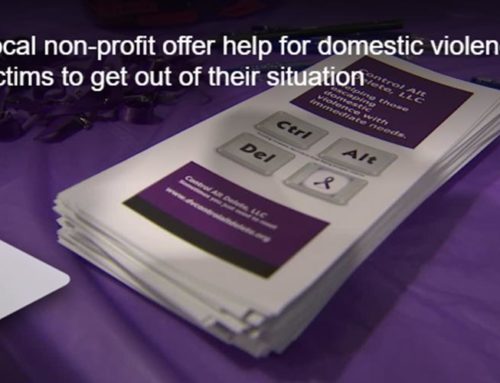
At Control Alt Delete, we regularly see the lasting effects of emotional abuse. While many people recognize bruises or broken bones, the invisible wounds caused by years of manipulation can take decades to identify and even longer to heal.
How Abusers Manufacture Fear
Children naturally trust the adults who raise them. If a parent repeatedly tells a child that something is incredibly dangerous—even when the actual risk is small—that child often accepts it as fact.
The fear is reinforced through stories, warnings, emotional reactions, punishments, and repeated reminders. Over time, the child doesn’t simply learn caution; they develop anxiety.
Then comes the manipulation.
Once the fear exists, the abusive parent has an incredibly effective tool for controlling behavior.
They might say:
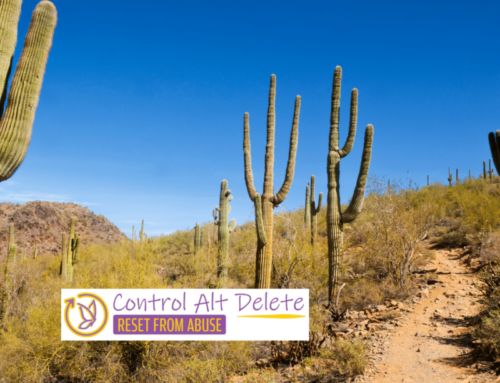
- “You can’t go there. What if there are snakes?”
- “Don’t hike. It’s too dangerous.”
- “You shouldn’t travel alone.”
- “Stay close to me.”
- “You’ll get hurt if you don’t listen.”
On the surface, these statements sound protective. In reality, they may have very little to do with safety and everything to do with control.
When “Concern” Is Really Control
Many Survivors struggle to recognize this manipulation because it is disguised as love or concern.
An abusive parent or partner rarely says, “I want to control you.”
Instead they say:
- “I’m just worried about you.”
- “I’m only trying to keep you safe.”
- “You know how dangerous that is.”
- “I’m saying this because I care.”
That is what makes this tactic so difficult to identify.
The words sound loving.
The effect is limiting.
Years later, even after gaining independence, one phone call or one comment can reopen wounds that seemed long healed.
The Trauma Doesn’t Always Stay in Childhood
Many adult Survivors work incredibly hard to overcome fears that were planted by someone else.
They learn to travel.
They try new experiences.
They build confidence.
They create healthy memories with their own children and grandchildren.
Then, sometimes decades later, the abusive person says something that reactivates that original fear.
Suddenly the anxiety returns.
The nightmares come back.
The mind races.
It can feel confusing because logically, the Survivor knows better. Emotionally, however, trauma doesn’t always respond to logic. Trauma often responds to familiar triggers.
That doesn’t mean the Survivor is weak.
It means the conditioning was powerful.
Fear Was Never About Snakes
For some people, the manufactured fear might involve snakes.
For others it may be strangers, travel, driving, failure, money, weather, illness, dogs, airplanes, or simply making decisions without permission.
The object of the fear isn’t actually the point.
Control is.
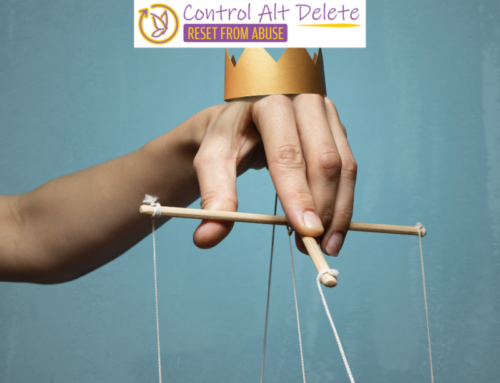
If an abuser can convince someone the world is too dangerous without them, the Survivor becomes more dependent on the abuser.
Dependence creates power.
Power maintains abuse.
Why Survivors Often Don’t Recognize This for Years
Children believe what trusted adults tell them.
When those adults repeatedly reinforce fear, it becomes part of how the brain interprets the world.
Many Survivors don’t realize until their 40s, 50s, or even later that some of their strongest fears were never naturally theirs.
They were taught.
They were reinforced.
They were maintained.
Recognizing that truth can be painful, but it can also be incredibly freeing.
Breaking the Cycle
Healing doesn’t necessarily mean eliminating every fear.
Sometimes healing simply means recognizing where the fear came from.
It means asking:
- Is this fear based on reality?
- Or is it based on years of conditioning?
- Who benefits if I stay afraid?
- What experiences have I missed because of this fear?
- What healthy memories am I preventing because someone else taught me to be afraid?
Awareness allows Survivors to pause before automatically responding to old programming.
That pause creates choice.
Choice creates freedom.
Creating New Memories Instead of Living Old Fears
One of the most powerful ways Survivors reclaim their lives is by creating new, healthy experiences.
Taking grandchildren hiking.
Going on family adventures.
Trying something that once felt impossible.
Building memories that are defined by joy instead of fear.
This doesn’t mean ignoring genuine risks. Healthy caution is important. Carry water. Stay on marked trails. Learn about local wildlife. Make smart decisions.
But healthy preparation is very different from living inside fear that someone else intentionally planted.
Control Alt Delete Believes Freedom Includes Emotional Freedom
Escaping domestic violence is about far more than leaving a dangerous home.
It is also about recognizing the invisible chains that abuse leaves behind.
Some chains are financial.
Some are physical.
Some are emotional.
Some are built from fears that were carefully planted over years and repeatedly watered with manipulation disguised as love.
Healing begins when Survivors realize those fears do not define them.
You deserve to build healthy memories.
You deserve to experience joy.
You deserve relationships that encourage growth instead of limiting it.
And you deserve the freedom to recognize when fear is protecting you—and when it is simply the echo of someone else’s attempt to control your life.
At Control Alt Delete, we believe every Survivor deserves the opportunity to escape abuse, reclaim their independence, and begin replacing fear with freedom. Because the barriers that keep someone trapped aren’t always locked doors. Sometimes they’re invisible beliefs that took years to build—and they can be overcome, one courageous step at a time.